 award of merit
cmacdonald@hlkagency.com
Most people in St. Louis knew The Workhouse existed. Very few understood what happened inside it.
For years, HLK partnered pro bono with ArchCity Defenders (ACD), a holistic legal advocacy organization combating the criminalization of poverty and state violence, to support the “Close The Workhouse” movement. Together, alongside a coalition of community leaders, they exposed inhumane conditions and ultimately forced the closure and demolition of the Medium Security Institution. It was a hard-won victory. A policy change. A headline.
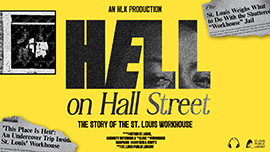
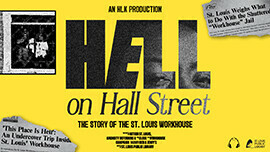
But justice doesn’t end when a building comes down. If the truth disappears with it, the system it represented has a way of returning. “Hell on Hall Street” was created to make sure it couldn’t.
Not as a campaign, but as a permanent act of visibility designed to preserve the truth, honor the people behind the movement, and transform a local victory into a model for change far beyond St. Louis. The idea was simple: If harm thrives in invisibility, then lasting justice requires visibility that endures.
The story was told the only way it could be: through the voices of those who lived it. The film centers around first-person testimony from formerly incarcerated individuals, many sharing their experiences publicly for the first time. Their voices aren’t supporting content — they are the narrative: unfiltered, emotional, and impossible to ignore. Around them, the film reveals the system that allowed The Workhouse to exist — and the movement, led by ACD and the community, that dismantled it.
This responsibility shaped every creative decision. Interviews were conducted with care. Editing prioritized dignity over dramatization. Nothing was included for spectacle, only for truth. Visually, The Workhouse becomes a central force: first, as a looming presence in archival footage and legal proceedings. Then by its absence, structure erased, but a legacy that refuses to disappear.
The story was still unfolding during production. The team captured the movement in real time — from “Empty Not Closed” to demolition, adapting as history was being written and preserving the tension between closure and the unresolved questions that remain.
And, just as intentionally as it was made, it was released. The film premiered at the St. Louis Public Library, returning the story to the community that fought for it, before expanding through advocacy networks and partners like Ben & Jerry’s and the Freedom Community Center. It’s built to travel, to educate, and to equip others facing similar systems.
Its impact continues to grow. Audiences have called it “eye-opening” and “mobilizing.” Organizations are using it to spark dialogue, inform strategy, and guide action beyond St. Louis. What began as a local fight is now a transferable blueprint demonstrating how storytelling, legal advocacy, and community pressure can dismantle systemic harm.
Closing The Workhouse was a moment. “Hell on Hall Street” ensures it becomes something more enduring: As a record of truth, a tool for change, and proof that when a community makes injustice visible, it doesn’t just win — it gives others the power to win too.