
 category finalist
alison@thequirkcreative.com
The strategy for Phynd was rooted in a critical market observation: the "Missing Middle" of gaming. While the industry was focused on "hardcore" gamers willing to pay $70 per title and $500 for hardware, a massive audience of casual and lapsed gamers was being left behind by the sheer cost of entry. Our strategy was to pivot Phynd from a niche cloud-gaming experiment to a mass-market alternative to the "Console Cartel."
Our strategic framework was built on Friction Removal. We identified that the primary barrier to entry wasn't a lack of interest in games, but the "friction" of hardware updates, subscription management, and upfront costs. The strategy was to position Phynd as the "Path of Least Resistance." By offering a service that lives directly on the Smart TV—no downloads, no boxes, no bills—we created a new category: "Instant-Access Gaming."
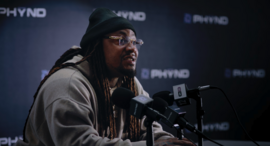
To execute this, we strategically chose Marshawn Lynch as our brand avatar. The choice was surgical: Lynch appeals across demographics, from Gen Z to older sports fans, and carries an aura of "unbought" authenticity. His presence validated the "No-BS" strategy, signaling that this wasn't a corporate gimmick, but a genuine shift in the business model.
We also adopted a "Smart TV First" media strategy. Rather than fighting for attention on mobile or PC, we targeted the living room—the hearth of the home where the "BS" of cable boxes and consoles is most felt. By showing consumers that the device already hanging on their wall was secretly a high-powered gaming rig, we turned every Smart TV owner into a potential Phynd user overnight.
The Results:
This strategy of aggressive democratization paid off. By moving Phynd from a "streaming service" to a "liberation tool," we saw immediate traction among users who had previously opted out of the current console cycle. The strategy proved that when you remove the financial and technical barriers to entry, the total addressable market for gaming expands exponentially. We didn't just find a gap in the market; we built a bridge to an audience that the rest of the industry had ignored.