
 15
15
peter@brayand.co
Light pollution is a real and growing environmental and safety problem, but it suffers from a fundamental communications challenge. People don’t notice it, and for the few that do, it is an abstract problem.
So the nonprofit DarkSky International made an unusually bold decision for this pro bono campaign. Instead of trying to explain the problem better, the organisation stepped directly into the culture creating much of the light pollution, the auto industry. For the purposes of the campaign, the nonprofit became an automotive company, launching under the name DarkSky Motors. The client actually changed for the campaign so they could insert themselves into the industry that is a large part of the problem.
This required the client to behave like a real car manufacturer, adopting the design standards, credibility signals, and cultural conventions of the automotive industry - the campaign was going to be a product.
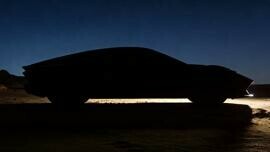
DarkSky Motors created the DarkSky One, the first vehicle ever designed for night-time first. The idea challenged one of the industry’s longest-standing assumptions, that more light automatically means better visibility. The design was built on a simple but counterintuitive insight: darkness helps you see better. By carefully controlling glare, contrast, reflection, and light distribution, the car demonstrated that visibility can improve when light is used more intelligently, not more aggressively.
For a nonprofit to temporarily transform itself into a car company required genuine conviction. DarkSky entered the industry’s arena and spoke its language. The vehicle was developed using professional automotive design processes and AI-assisted modelling so the concept would withstand scrutiny from designers, engineers, media, and enthusiasts alike. We even convinced one of the world’s great car design firms in Tokyo to also assist pro bono.
The launch followed real automotive conventions, including pre-release spy shots seeded with automotive bloggers to generate speculation around an unknown prototype, which was then picked up by wider automotive media that thought it was real. The DarkSky One was then unveiled at the Detroit Auto Show, placing the nonprofit directly inside one of the most influential platforms in global car culture
By becoming DarkSky Motors, DarkSky International transformed an invisible issue into something tangible and culturally relevant. The car itself became the campaign, and the campaign entered the very industry most capable of influencing change.
With minimal paid media, the idea generated substantial earned attention across automotive, technology, design, and mainstream media. More importantly, it reframed light pollution from an abstract environmental issue into a conversation about safety, responsibility, and the role of design.
DarkSky International released its policy position on headlights and commenced lobbying prior to the campaign launch, and less than 2 months after launch U.S. Congress directed regulators to examine overly bright headlights for the first time.
The nonprofit crossed categories completely for the campaign, it wasn't just a communications idea. DarkSky International used the creation of a car, the DarkSky One from DarkSky Motors, to insert itself into and change the industry that causes much of the light pollution we see.