 11
11
charlene@circonflex.com
The music track is a re-record of the well-known Quebec song "Fille de Personne II" by young artist Hubert Lenoir.
In this particular case, what works is not a single element, but a carefully balanced combination of musical levers:
1. Song choice:
The lyrics don’t just accompany the visuals : they carry the storytelling.
2. Transformation of the track:
Re-arrangement, re-orchestration, re-harmonization, re-recording.
We don’t just rely on a familiar song : we make it rediscoverable. This emotional surprise directly strengthens the narrative.
3. Micro-scoring to picture:
Adding sections, breaths, and silences.
The music doesn’t sit on top of the film : it evolves with it.
4. Sonic boldness:
Saturated textures, intentional distortion, omnipresent Moog bass in the chaos, followed by sharp breaks.
Risky choices, but clear : and therefore memorable.
By working simultaneously on four fronts:
• recognition
• novelty
• narrative precision
• aesthetic radicalness
we don’t just create “a good soundtrack.”
We build an emotional architecture that supports the film, amplifies memory, and makes viewers want to watch it again.
This is exactly where music stops being mere accompaniment and becomes a strategic tool.
Lyrics translation :
Fille de personne (No one’s daughter)
Hey, don't waste your time
You're not your father’s daughter
Not even your mother’s daughter
You're no one’s (daughter)
I came to tell you that you have the right to change
I saw the future of a liberated woman
Where you were wearing leather and a shaved head
I saw your future
I saw your future
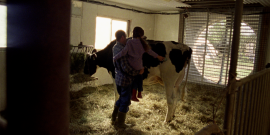
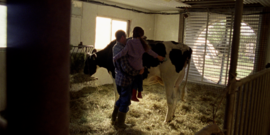
This film tells the story of Jeanne, a young woman growing up on her family’s dairy farm in Québec, as she navigates the tension between inheritance and self-determination. Rooted in a deeply traditional industry, her journey reflects a new generation redefining what it means to take over.
At the heart of the film is Fille de Personne II, an iconic Québec song by Hubert Lenoir, whose lyrics “You’re not your father’s daughter… you have the right to change… I saw the future of a liberated woman”, perfectly echo Jeanne’s evolution.
To fully align music and narrative, Hubert Lenoir re-recorded his own vocals, bringing new emotional depth to a familiar track. The song was entirely reimagined, blending Moog bass, analog synths, live drums, and saturated textures to create a sound that feels both nostalgic and boldly contemporary.
Through precise micro-scoring, the music evolves with the visuals, shaping the emotional rhythm of the film. More than a soundtrack, it becomes a narrative force, transforming a well-known cultural piece into a powerful expression of change, identity, and generational renewal.
Using Fille de Personne II, a track born from a new generation and rooted in themes of evolution and transformation, creates a powerful alignment with Jeanne’s story. Just like her, the song exists in continuity with the past while pushing it forward.
Its lyrics about breaking free from inherited identity and embracing change directly echo Jeanne’s journey on the farm: not rejecting her legacy, but reshaping it on her own terms.
This parallel between music and narrative reinforces the idea that agriculture in Québec is evolving : driven by a generation that honors where it comes from, while redefining what comes next.